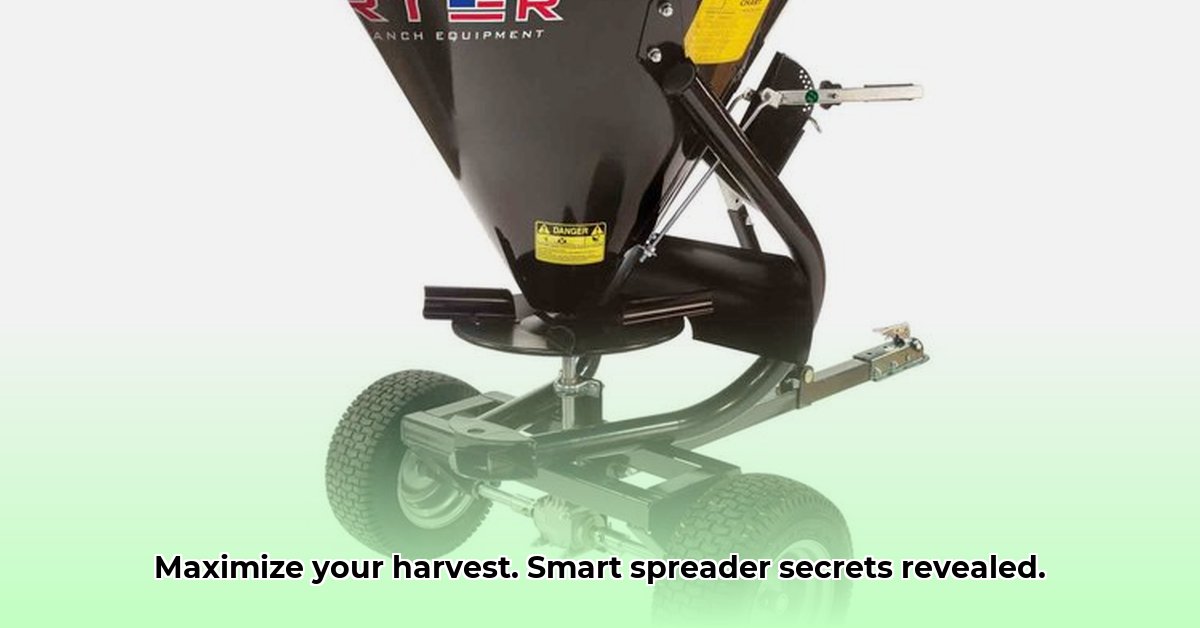
Lawn Tractor Pull-Behind Spreaders: Your Guide to Smarter Fertilizer Application
Lawn tractor pull-behind spreaders are transforming how farmers fertilize, offering a path to increased yields and environmental sustainability. These aren't just for manicuring lawns; they're becoming essential tools for precision agriculture. This guide helps you choose, use, and maintain these spreaders effectively. For more on lawn tractor attachments, check out this helpful resource on lawn tractor aerators.
Selecting the Right Spreader: Key Considerations
Choosing the right spreader is critical for efficiency and accuracy. Consider these factors:
Spreader Capacity: The spreader's capacity must align with your field size. A larger capacity is needed for larger fields, while a smaller one might be better suited to smaller plots and easier maneuvering. Overestimating capacity could lead to increased time and effort spent refilling, while underestimating capacity could significantly reduce efficiency.
Calibration Precision: Look for spreaders with clear calibration instructions and adjustable settings. Inconsistent fertilizer distribution leads to uneven crop growth and wasted resources. Precision calibration is the cornerstone of effective fertilizer application.
Spread Pattern Adjustability: The ability to adjust the spread pattern (the width of the fertilizer distribution) is crucial. Wider patterns are ideal for large, open fields, while narrower patterns are beneficial for smaller areas or precise application near sensitive areas. Adaptability is essential for optimizing fertilizer use based on field conditions and crop requirements.
Fertilizer Compatibility: Ensure the spreader is compatible with the type of fertilizer you use; different spreaders are designed for granular, liquid, or powdered fertilizers. Compatibility errors can greatly reduce fertilizer effectiveness or even damage the spreader. Carefully check specifications before purchasing.
Mastering Fertilizer Application Techniques
Efficient application requires more than just the right spreader; proper technique is paramount.
Calibration is Essential: Always calibrate your spreader before each use, following the manufacturer's instructions precisely. This ensures consistent fertilizer application rates, preventing under or over-fertilization, both of which can negatively impact crop yield and quality. Accurate calibration is a fundamental step in maximizing your return on investment. A properly calibrated spreader improves the cost-effectiveness of your fertilization process.
Maintain Consistent Speed: A uniform speed during application is crucial for even fertilizer distribution. Variations in speed will lead to uneven spreading, causing areas of deficiency and excess, impacting crop growth and nutrient uptake. A steady pace ensures consistent fertilizer application across your fields.
Strategic Overlap: Slight overlap (about 10-15%) between passes is recommended for complete coverage and uniform fertilizer distribution. Without sufficient overlap, some areas of the field might receive less fertilizer than others, leading to uneven growth and lower yields. Consistent fertilization ensures optimal nutrient uptake by plants.
Account for Soil Conditions: Soil type and moisture content affect fertilizer spread. Compacted or wet soil may impact penetration and distribution. Adjust application techniques accordingly to ensure optimal fertilizer distribution and absorption. Considering soil conditions improves fertilizer utilization and prevents waste.
Weather Awareness: Avoid applying fertilizer in windy conditions, as this can lead to drift and wasted fertilizer. Similarly, avoid spreading just before predicted rainfall; this also reduces effectiveness and leads to wasted resources. Weather greatly affects the distribution of your fertilizer.
Sustainable Practices and Cost Savings
Using pull-behind spreaders strategically can bring significant sustainability benefits and cost savings:
Reduced Fertilizer Waste: Precise application minimizes fertilizer waste, translating directly into cost savings. Efficient fertilizer use reduces environmental impact and improves the overall economic viability of your farming operation.
Environmental Protection: Reduced fertilizer runoff protects water quality, minimizes soil erosion, and reduces greenhouse gas emissions. Efficient fertilizer management is a cornerstone of sustainable agriculture, positively impacting ecosystems and conservation efforts.
Improved Soil Health: Proper nutrient management promotes healthier soil, enhancing fertility and crop resilience. Optimal soil health enhances plant growth and fosters a more sustainable agricultural practice. Healthy soil is the basis for bountiful harvests.
Enhanced Crop Yields: Consistent and precise nutrient delivery leads to healthier, more vigorous plants and ultimately, increased crop yields. Improved harvests reflect the efficiency and effectiveness of your fertilizer application techniques.
Addressing Challenges and Future Trends
While pull-behind spreaders are highly beneficial, some challenges remain.
Calibration Complexity: Some spreaders are more challenging to calibrate than others. Proper training and understanding of the spreader's mechanics are essential for optimal performance. Seeking professional guidance may be beneficial for mastering the calibration process if you're encountering difficulty.
Maintenance Requirements: Regular maintenance is crucial for ensuring accuracy and extending the life of your spreader. Ignoring maintenance can lead to inaccurate applications, costly repairs, and premature equipment failure.
Technological Advancements: Integrating GPS and soil-mapping technology with spreaders will further enhance precision and efficiency in the future. Advances in precision agriculture are constantly improving the effectiveness and optimization of fertilizer application. These developments promise greater efficiency and sustainability.
| Advantages | Disadvantages |
|---|---|
| Precision application leading to efficiency | Requires specialized knowledge and skill |
| Reduced fertilizer waste and costs | Potential for initial capital investment |
| Environmental sustainability | Calibration requires attention to detail and care |
| Increased crop yields | Maintenance is critical for optimal performance |
"Precision application is paramount in modern agriculture," states Dr. Anya Sharma, Agricultural Engineer at Cornell University. "Using these spreaders correctly maximizes nutrient uptake, minimizes waste, and contributes to a more sustainable farming future."
By understanding and applying the principles outlined in this guide, farmers can effectively utilize lawn tractor pull-behind spreaders to optimize fertilizer application, boost crop yields, and contribute to more sustainable and profitable agricultural practices. Remember, precision, consistency, and ongoing learning are crucial for success.